
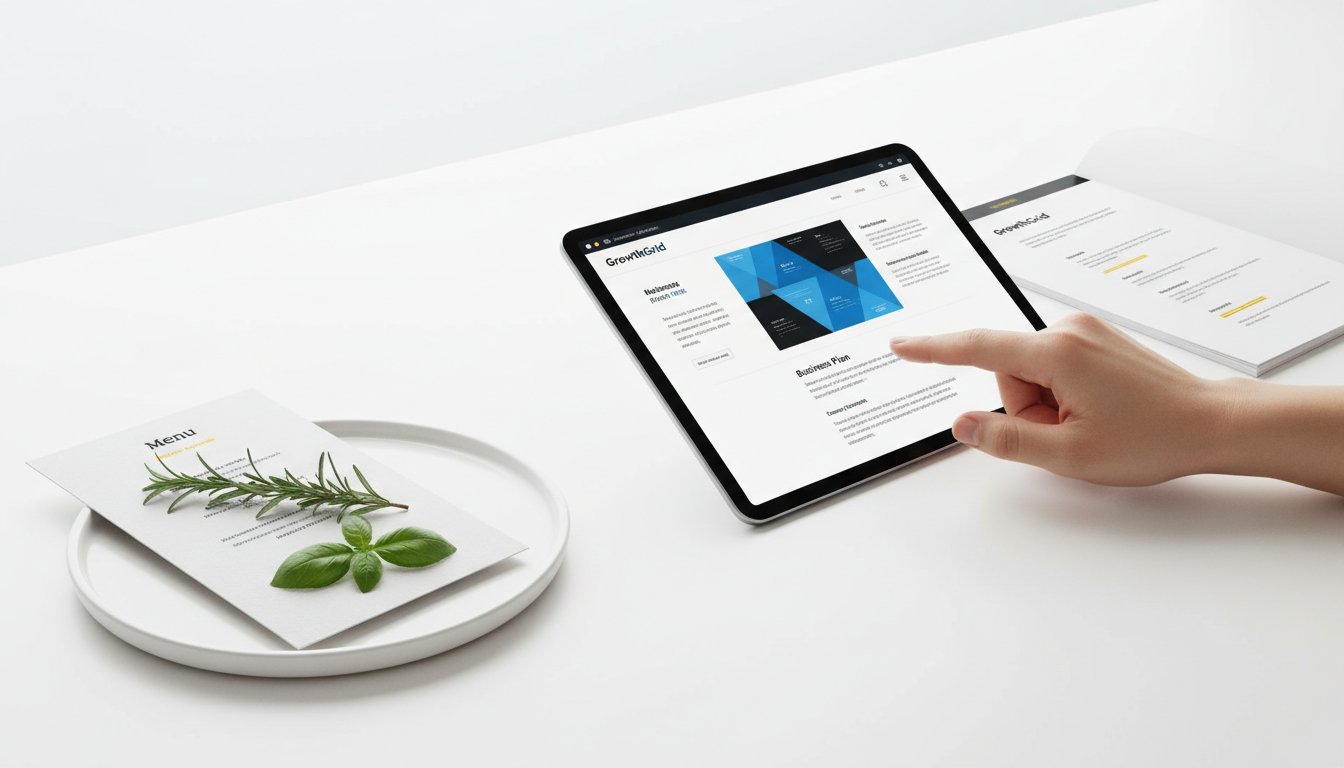
You have the perfect concept for a restaurant, a killer menu, and the passion to make it happen. But before you can secure a loan, sign a lease, or win over investors, you need a critical document: a professional business plan. It’s your roadmap, turning your culinary dream into a profitable reality.
Writing one from scratch can feel overwhelming, and staring at a blank page is the fastest way to kill your momentum. That’s why we’ve created this complete guide. We’ll walk you through every essential section and provide a free, downloadable template to get you started. Or, we’ll show you how to skip the hard work and generate a complete, investor-ready plan in just 8 minutes.
Free Restaurant Business Plan Template
Get a head start with our professionally structured template. It covers all the key sections you need to impress lenders and investors.
What Goes Into a Restaurant Business Plan? (The Template)
Think of your business plan as the comprehensive blueprint for your restaurant’s success. It’s the document that proves to lenders, investors, and even yourself that your concept is viable and has a clear path to profitability. A strong plan forces you to think through every detail, from your target market to your staffing needs. We’ll break down the 7 key sections you absolutely must include to make your case.
1. Executive Summary: Your Restaurant’s Elevator Pitch
This is the first thing an investor reads, so it needs to be powerful. It’s a brief, compelling overview of your entire plan, summarizing the most important points. Be sure to include your restaurant’s mission, a snapshot of your concept (e.g., “a fast-casual Italian pasta bar”), and the key financial highlights that show your potential for success. Pro Tip: Write this section last. It’s much easier to summarize everything once you’ve already written the details.
2. Company Description: The Heart of Your Concept
Here’s where you bring your vision to life. Go into detail about your restaurant type—are you a fine dining establishment, a cozy neighborhood bistro, or a bustling quick-service taco stand? Describe your menu concept, your unique service style, and what makes you different from everyone else (your unique selling proposition). You should also clearly state your legal structure, whether you’re an LLC, a sole proprietorship, or a partnership.
3. Market Analysis: Who Are Your Customers and Competitors?
No restaurant operates in a vacuum. In this section, you need to prove you understand the landscape you’re entering. Clearly define your target audience—are you catering to young professionals on their lunch break, families looking for a weekend dinner spot, or foodies seeking a unique culinary experience? Analyze your direct and indirect local competitors, identifying their strengths and, more importantly, their weaknesses. Finally, explain how your restaurant will fill a gap in the market and stand out from the crowd.
4. Operations Plan: Your Day-to-Day Blueprint
This section outlines the nitty-gritty of how your restaurant will function every single day. Detail your daily procedures, from morning prep and opening checklists to end-of-night closing duties. Outline your staffing needs for both the front and back of the house, identify your key suppliers for food and beverages, and specify the technology you’ll use, like your Point of Sale (POS) system. Don’t forget to include crucial details about your location and any necessary permits or licenses.
5. Marketing & Sales Strategy: How You’ll Fill Your Tables
A great restaurant with no customers is just a hobby. Your marketing plan shows how you’ll attract and retain a loyal customer base. Describe your brand identity, your launch plan for a buzzy grand opening, and your ongoing online strategy, including social media, your website, and potentially paid ads. It’s also crucial to explain your plans for building customer loyalty and encouraging repeat business, such as through email marketing or a rewards program.
6. Management Team: The People Behind the Passion
Investors bet on people as much as ideas. Use this section to introduce the key players who will run the restaurant—the owners, the head chef, and the general manager. For each person, highlight their relevant experience and past successes in the restaurant industry. The goal is to build confidence and show investors that you have the right, experienced team in place to navigate the challenges of the industry and lead the business to success.
7. Financial Projections: The Numbers That Matter
This is often the most scrutinized section of your business plan, especially by lenders and investors. You need to present realistic and well-researched numbers. Be sure to include a detailed list of your startup costs, a monthly sales forecast for the first year, and a comprehensive break-even analysis. Most importantly, you must project your cash flow statement, income statement (profit & loss), and balance sheet for at least the first three years of operation. Struggling with the numbers? This is where professional help or smart tools can be a lifesaver. Let our AI handle the financials for you.
The Problem: Why Filling a Blank Template Is So Hard
Even with a template, the process can be grueling. A blank page is intimidating, and trying to fill it with persuasive, professional language can take weeks. Financial forecasting is notoriously complex; one wrong assumption can throw off your entire plan. It’s tough to know what investors *really* want to see. Ultimately, you can waste dozens of hours on a document—time that could be spent perfecting your menu, scouting locations, or building buzz for your launch.
The Smart Way: Generate Your Plan with AI in 8 Minutes
Stop staring at a blank template. There’s a faster, more efficient way to get an investor-ready business plan. Instead of spending weeks writing, you can use a powerful AI tool to do the heavy lifting for you. GrowthGrid’s AI builds a complete, 72-section business plan that is meticulously personalized to your unique restaurant concept. You can save 90% on the costs of hiring a professional consultant and get a comprehensive plan in minutes, not months.
How It Works: Your Investor-Ready Plan in 3 Steps
The process is so easy, you won’t believe it. You get all the benefits of a professionally written plan without the cost or the wait.
- 1. Answer a few simple questions about your restaurant idea, your concept, and your goals.
- 2. Our AI writes your entire business plan, including the complex financial projections, market analysis, and operational strategy.
- 3. Download your complete plan in a professional PDF or editable DOC format, ready to present to investors.
Why AI Is Your Secret Weapon for Restaurant Planning
Using AI isn’t just about speed; it’s about quality and precision. Our system instantly creates accurate, industry-specific financial projections that banks and investors trust. It ensures you don’t miss any of the 72 sections that professionals look for, giving your document the comprehensive detail it needs to be taken seriously. It gives you a massive head start, saving you dozens of hours of painstaking work and research. It’s the ultimate smart hack for the modern entrepreneur. Ready to see the magic? Generate Your Restaurant Business Plan Now ✨
Frequently Asked Questions
Do I really need a business plan for a small cafe or food truck?
Absolutely. Even for smaller operations, a business plan is crucial. It forces you to validate your idea, understand your costs, and define your path to profitability. If you ever need a small business loan or want to partner with someone, it will be the first thing they ask for.
How long should a restaurant business plan be?
There’s no magic number, but a typical restaurant business plan is between 20 and 50 pages. The key is to be thorough and detailed without adding unnecessary fluff. A comprehensive plan generated by AI will typically fall within this ideal range.
What’s the biggest mistake people make when writing a restaurant business plan?
The most common mistake is unrealistic financial projections. Overestimating revenue and underestimating expenses is a huge red flag for investors. It’s essential to base your numbers on solid market research, not just wishful thinking.
Is an AI-generated business plan good enough to get a bank loan?
Yes. Modern AI tools like GrowthGrid create plans that are comprehensive, professionally formatted, and data-driven. They include all the sections and detailed financial statements that lenders require, making them a powerful and credible tool for securing funding.
How much does it cost to create a business plan with GrowthGrid?
GrowthGrid offers a freemium model where you can generate a basic plan for free to see how it works. The full, comprehensive 72-section plan is available for a small fraction of the cost of hiring a traditional business plan writer, saving you up to 90%.
Your restaurant deserves more than just a dream—it deserves a concrete plan for success. Whether you use our free template to guide your writing or leverage the incredible power of AI to create your plan in minutes, taking this step is the most important investment you can make in your future. Don’t wait for momentum to fade. Create Your Personalised Business Plan with AI in 8 Minutes ✨