
Stressed about the real startup costs of a vending machine business? Wondering how you find locations that actually make money instead of just collecting dust? It’s easy to get overwhelmed by the unknowns, from restocking logistics to calculating real-world profit.
Forget the guesswork. This guide is your complete, step-by-step roadmap for 2025. We’ll demystify the entire process, giving you the clarity and confidence to move forward. We’re breaking down the exact investment you’ll need-no surprises-and revealing the strategies for securing those profitable, high-traffic locations you’ve been looking for.
You’ll also get a simple formula to calculate your potential earnings and a clear plan for managing inventory and maintenance. By the end, you’ll have a realistic, actionable plan to launch your venture and decide if this is the perfect business model for you. Let’s build your passive income stream.
Is a Vending Machine Business Actually Profitable? The Real Numbers
Let’s cut through the hype. A vending machine business isn’t a “set it and forget it” path to riches. It’s a semi-passive income stream that rewards smart planning and efficient execution. Your success isn’t about luck; it’s a direct result of managing volume, location, and product choice effectively. Forget guesswork-let’s look at the real numbers you need to track for a profitable venture.
Startup Costs: What to Budget For
Getting started requires a clear, realistic budget. Don’t get caught by surprise costs that can sink your business before it even launches. Here’s a fast breakdown:
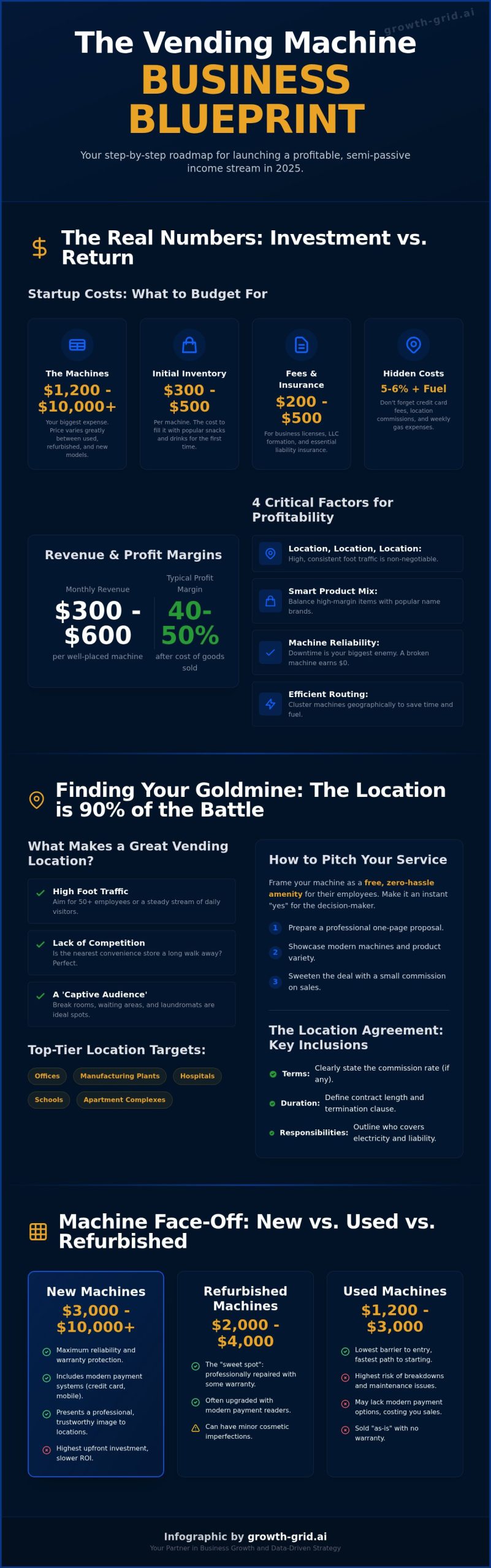
- The Machines: This is your biggest expense. A used or refurbished machine can cost $1,200-$3,000, while new models with modern tech can run $3,000-$10,000+.
- Initial Inventory: Budget $300-$500 per machine to fill it with popular snacks and drinks for the first time.
- Fees & Insurance: Factor in $200-$500 for business licenses, LLC formation, and essential liability insurance.
- Hidden Costs: Remember credit card reader fees (around 5-6% per transaction), potential location commissions, and your weekly fuel expenses.
Revenue & Profit Margins Explained
A well-placed machine can generate $300-$600 in monthly revenue, with top-tier locations earning even more. But revenue isn’t profit. Your key metric is your profit margin-what’s left after the Cost of Goods Sold (COGS). While the basic concept hasn’t changed much throughout the history of vending machines, modern operators maximize profit by carefully managing these numbers. Most vending items carry a healthy 40-50% profit margin. Setting prices involves finding the sweet spot that maximizes sales volume without sacrificing that margin.
Key Factors That Influence Your Profit
Profitability in this business boils down to four critical factors. Get these right, and you’re positioned for success.
- Location, Location, Location: High, consistent foot traffic is non-negotiable. Think office break rooms, apartment complexes, schools, and gyms where people are a captive audience.
- Smart Product Mix: Balance high-margin generic items with popular, must-have name brands. Test healthy options alongside traditional snacks to see what your specific location demands.
- Machine Reliability: A broken machine earns $0. Downtime is your biggest enemy, so invest in reliable equipment and perform regular maintenance.
- Efficient Routing: Plan your restocking routes to save time and fuel. Servicing multiple machines in a tight geographic area is far more profitable than driving all over town.
Finding Your Goldmine: How to Secure Profitable Vending Locations
Let’s be direct: in the vending machine business, your location is 90% of the battle. A state-of-the-art machine in an empty hallway will fail, while a basic machine in a bustling factory breakroom can be a cash cow. Stop stressing about the hardware and focus on finding the right spot. That’s your goldmine.
The smart approach is to scout your local area first. Drive around and create a list of potential businesses. Then, prepare for the art of the friendly walk-in or a confident cold call. Building a relationship with the decision-maker-the office manager, HR director, or owner-is the fastest path to getting your machine in the door.
What Makes a Great Vending Location?
The formula for a profitable location is simple: consistent foot traffic and a captive audience. You’re looking for places where people work, wait, or gather with limited access to other quick snack options. Think efficiency. Think convenience.
- High Foot Traffic: Aim for locations with 50+ employees or a steady stream of public visitors daily.
- Lack of Competition: Is the nearest convenience store or cafe a long walk away? Perfect.
- A ‘Captive Audience’: Break rooms, waiting areas, and laundromats are ideal spots where people have downtime.
- Top-Tier Targets: Focus your search on offices, manufacturing plants, hospitals, schools, and apartment complexes.
How to Pitch Your Vending Service to Business Owners
Securing a spot is a sales process. Your goal is to make it an instant “yes” for the decision-maker. Frame your service not as a machine, but as a free, zero-hassle amenity you are providing for their employees or customers. Arrive prepared with a professional one-page proposal showing your modern machines and product variety. To sweeten the deal, consider offering a small commission on sales. Be ready to answer questions about machine dimensions, electricity usage, and your service schedule.
The Location Agreement: What to Include
Once you get a verbal agreement, formalize it with a simple, one-page contract. A complex legal document can scare off a potential partner. Your agreement should be clear, professional, and cover the essentials without overwhelming them. While this document handles your partnership, remember to stay compliant with all federal and state licensing requirements to operate your business legally.
- Terms: Clearly state the commission rate (if any) and when it will be paid.
- Duration: Define the contract length (e.g., one year) and the termination clause (e.g., 30-day notice).
- Responsibilities: Outline who covers electricity (usually the location) and liability for damage or theft.
Choosing Your Machines and Products Wisely
Think of your vending machine as your most reliable, 24/7 salesperson. It never calls in sick and works around the clock. But for it to be profitable, it needs two things: flawless operation and products people actually want to buy. The right combination of machine and inventory is the foundation of a successful vending machine business. This means investing in reliable hardware with modern payment options-like credit card and mobile pay-and strategically tailoring your product selection to the specific demographic of each location.
New vs. Used vs. Refurbished Machines
Your initial equipment cost is a major decision. You have three main paths, each with clear trade-offs:
- New Machines: Expect to pay $3,000 – $7,000. The high price buys you peak reliability, a manufacturer’s warranty, and the latest tech. This is the low-stress, high-investment option.
- Used Machines: At $500 – $2,500, the savings are significant. However, you inherit potential maintenance issues with no warranty. This route requires more hands-on work and a budget for unexpected repairs.
- Refurbished Machines: This is the smart middle ground. A reseller inspects, repairs, and often provides a limited warranty, offering a balance of savings and security.
You can find equipment from manufacturers, dedicated resellers, and online marketplaces like eBay or Craigslist.
Types of Vending Machines
Not all machines are created equal. The right type depends entirely on your location and business model. Consider the most common options:
- Snack & Drink Combo Machines: The most popular and versatile choice, perfect for offices, break rooms, and waiting areas.
- Bulk Vending: Low-cost and low-maintenance machines for gumballs, small toys, or candy. Great for entry-level operators.
- Specialty Vending: A growing market for items like fresh coffee, healthy snacks, personal protective equipment (PPE), or even electronics.
Always measure the location’s available space before you buy. A machine that doesn’t fit is a costly mistake.
Smart Sourcing: Choosing High-Margin Products
The secret to profitability isn’t just selling-it’s sourcing smart. To maximize your margins, buy products in bulk from wholesale clubs like Costco or Sam’s Club, or establish accounts with dedicated vending distributors for better pricing. A crucial part of this process is mapping out your financial projections and sourcing strategy in a formal document; the official SBA guide to writing a business plan is an excellent resource for structuring this. Once you’re operating, use your machine’s sales data to identify best-sellers and cut the slow-moving items. Don’t guess what people want-let the data tell you.
A solid product strategy is key. Plan it out with a business plan.
The Legal & Operational Playbook for Your Launch
A profitable vending machine business isn’t just about great locations and popular snacks-it’s built on a solid legal and operational foundation. Setting things up correctly from day one saves you from massive headaches and financial risks down the road. Think of this as the essential checklist to get your business running efficiently and legally.
Structuring and Registering Your Business
Choosing the right structure is your first major decision. It impacts your taxes, liability, and paperwork. For most new owners, the choice is between a Sole Proprietorship and an LLC.
- Sole Proprietorship: ✓ Incredibly easy and cheap to start. ✗ Your personal assets (home, car) are not separate from the business if you’re sued.
- LLC (Limited Liability Company): ✓ Creates a legal shield, protecting your personal assets. ✓ Appears more professional to location managers. ✗ Requires more paperwork and state filing fees.
Once you decide, register your business name, get a free Employer Identification Number (EIN) from the IRS website, and open a dedicated business bank account. This keeps your finances clean and makes tax time 100% easier.
Vending Licenses, Permits, and Taxes
Don’t skip the paperwork. Operating without the right licenses can lead to fines that shut you down before you even start. Every area is different, so you must do local research. Your core requirements will likely include:
- State & Local Business Licenses: The basic permit to operate in your city or county.
- Sales Tax Permit: Allows you to legally collect and remit sales tax on your products.
- Food Handling Permits: If you plan to sell anything perishable (like sandwiches or fresh milk), this is non-negotiable.
Daily Operations: Restocking and Maintenance
This is where your efficiency directly impacts your profit. A smart operational plan minimizes wasted time and maximizes sales. Focus on creating a system for:
- Efficient Service Routes: Use a mapping tool to plan the fastest route between your machines. Save time, save gas, earn more.
- Inventory Management: Use a simple app or spreadsheet to track what sells. Stop guessing and start stocking what customers actually want.
- Routine Maintenance: On every visit, wipe down the glass and check the bill validator and coin mechanism. A clean, working machine encourages sales.
- Customer Service Plan: Have a clear sticker on each machine with your number for refunds or issues. A quick, friendly response builds a great reputation.
A clear operational playbook is just as vital as a financial one. To build a comprehensive strategy for your entire business in minutes, a tool like the Growth-Grid business plan generator can set your foundation for success.
Scaling Your Vending Empire: From One Machine to a Full Route
A single profitable machine is a great start, but the real wealth in the vending machine business comes from building a network. The ultimate goal is to create an efficient, profitable route of machines that generates consistent income. The fastest way to achieve this is by strategically reinvesting your early profits to fuel smart expansion. Stop thinking about one machine and start planning your empire.
When to Add Your Next Machine
Growth should be calculated, not rushed. Once your first machine is consistently generating profit, you have the green light to expand. The key is to work smarter, not just bigger, by following a simple formula for success:
- Reinvest Profits: Use the cash flow from your first machine to fund the second. This self-funding model helps you grow organically and avoid unnecessary debt.
- Secure the Location First: Never buy a machine on speculation. Find and secure a signed contract for a new, high-traffic location before you purchase the equipment for it.
- Create Density: Place your next machine geographically close to your first one. Servicing two machines in the same building or on the same block dramatically cuts your travel time and fuel costs.
Using Technology to Manage Your Route
Managing a growing route doesn’t have to mean working 80 hours a week. Modern technology makes scaling efficient and data-driven. Vending Management Systems (VMS) use telemetry to give you real-time inventory data on your phone. This means you stop wasting time on unnecessary visits and only service a machine when it actually needs restocking. Pair this with route planning software to optimize your driving path, and you can service more machines in less time.
Building vs. Buying an Existing Route
As you expand, you’ll face a critical decision: continue building your route one machine at a time, or buy an existing, established route? Each path has clear trade-offs.
- Buying a Route: This offers the major advantage of instant cash flow but requires significant upfront capital. Before buying, you must perform due diligence: verify the seller’s profit claims, inspect machine conditions, and review every location contract.
- Building a Route: This approach has a much lower barrier to entry and gives you 100% control over your locations and equipment. It demands more time and effort, but you build the business exactly how you want it, from the ground up.
This decision is a major turning point for your vending machine business, and the right choice requires a solid financial forecast. Planning to scale? Model your growth with an AI-powered business plan.
Turn Vending Knowledge into Vending Profits
You now have the complete blueprint for launching a successful venture. We’ve covered how a vending machine business can be incredibly profitable, why securing high-traffic locations is your ticket to success, and how to scale from a single machine to a thriving empire. The path is clear, and the opportunity is waiting for you in 2025.
But an idea without a plan is just a wish. The next critical step is creating a professional business plan to secure funding and guide your launch. This used to mean weeks of stress and expensive consultants. Not anymore.
Stop waiting and start building. With GrowthGrid.ai, you can create a complete, bank-ready plan in under 15 minutes. Join thousands of entrepreneurs who have saved 90% vs. hiring a consultant. Ready to plan your vending venture? Generate your professional business plan in minutes.
The roadmap is in your hands. Now go build your business, one transaction at a time.
Frequently Asked Questions
How much can one vending machine make per month on average?
A single machine’s monthly earnings can range from $75 to over $650. Profitability depends entirely on strategic placement. A machine in a quiet office might earn $75, while one in a busy hospital or university can easily clear $650+. The key factors are foot traffic, product pricing, and keeping the machine stocked and operational. Focus on high-traffic locations for maximum efficiency and returns.
What are the most profitable items to sell in a vending machine?
Maximize your profits by focusing on high-margin, high-demand items. Classic sodas like Coke and Pepsi, energy drinks like Red Bull, and popular chip brands (Doritos, Lays) are your most consistent sellers. For even higher margins, add candy bars and bottled water. The goal is to stock items that sell quickly and offer a 50-70% profit margin per unit, ensuring a fast return on your inventory investment.
Do I need an LLC to start a vending machine business?
While not legally required, forming an LLC is the smart, efficient move. It provides crucial liability protection by separating your personal assets (like your home and car) from business debts or potential lawsuits. Operating as a sole proprietor leaves you personally exposed. An LLC is a low-cost professional step for your vending machine business that secures your financial future from day one.
How do you handle machine breakdowns, repairs, and vandalism?
Efficiency is key. Handle minor issues like coin jams yourself to save time and money-many tutorials are available online. For complex electrical or refrigeration failures, have a reliable technician’s number saved. Mitigate vandalism risk by choosing secure, high-visibility locations and getting business insurance that covers property damage. Proactive maintenance is always faster and cheaper than reactive repairs.
Is it better to buy an established vending route or start from scratch?
This depends on your capital and timeline. Buying an established route provides instant cash flow and proven locations but requires a significant upfront investment ($10,000+). Starting from scratch is far more affordable but demands more “sweat equity” to secure profitable locations. If you want immediate results and have the funds, buy a route. If you’re on a budget and want to build efficiently, start from scratch.
How much money do you need to start a vending machine business?
You can launch your vending machine business efficiently with a starting budget of $2,000 to $3,000. This covers a reliable refurbished machine (around $1,500), initial product inventory ($300-$500), and business registration fees. Avoid the high cost of new machines initially. Focus your capital on a quality used machine and a great location to maximize your ROI from the very first month.
Can you start a vending machine business with no money?
Starting with zero cash is challenging but not impossible if you are resourceful. Some operators offer financing on machines, allowing you to pay as you earn. Alternatively, you could secure a profitable location first and use that contract to get a small business loan. Another strategy is to find businesses that provide a machine for free in exchange for a percentage of the profits, also known as profit-sharing.