

Thinking about how to start a vending machine business, but getting stuck on the details? The questions pile up fast: How much does it really cost? Where are the most profitable locations? And what about all the confusing paperwork? 😰 It can feel overwhelming enough to make you quit before you even get started.
Forget the stress. This guide is your fast-track answer for 2025. We cut through the noise to give you a clear, actionable 7-step roadmap that takes you directly from idea to income. You’ll learn how to find and secure the perfect locations, calculate your real startup costs, and understand your true profit potential.
Best of all? We’ll show you the smart way to create a professional, bank-ready business plan in minutes-not weeks. Stop wondering and start building. Let’s get your business launched. ✨
Key Takeaways
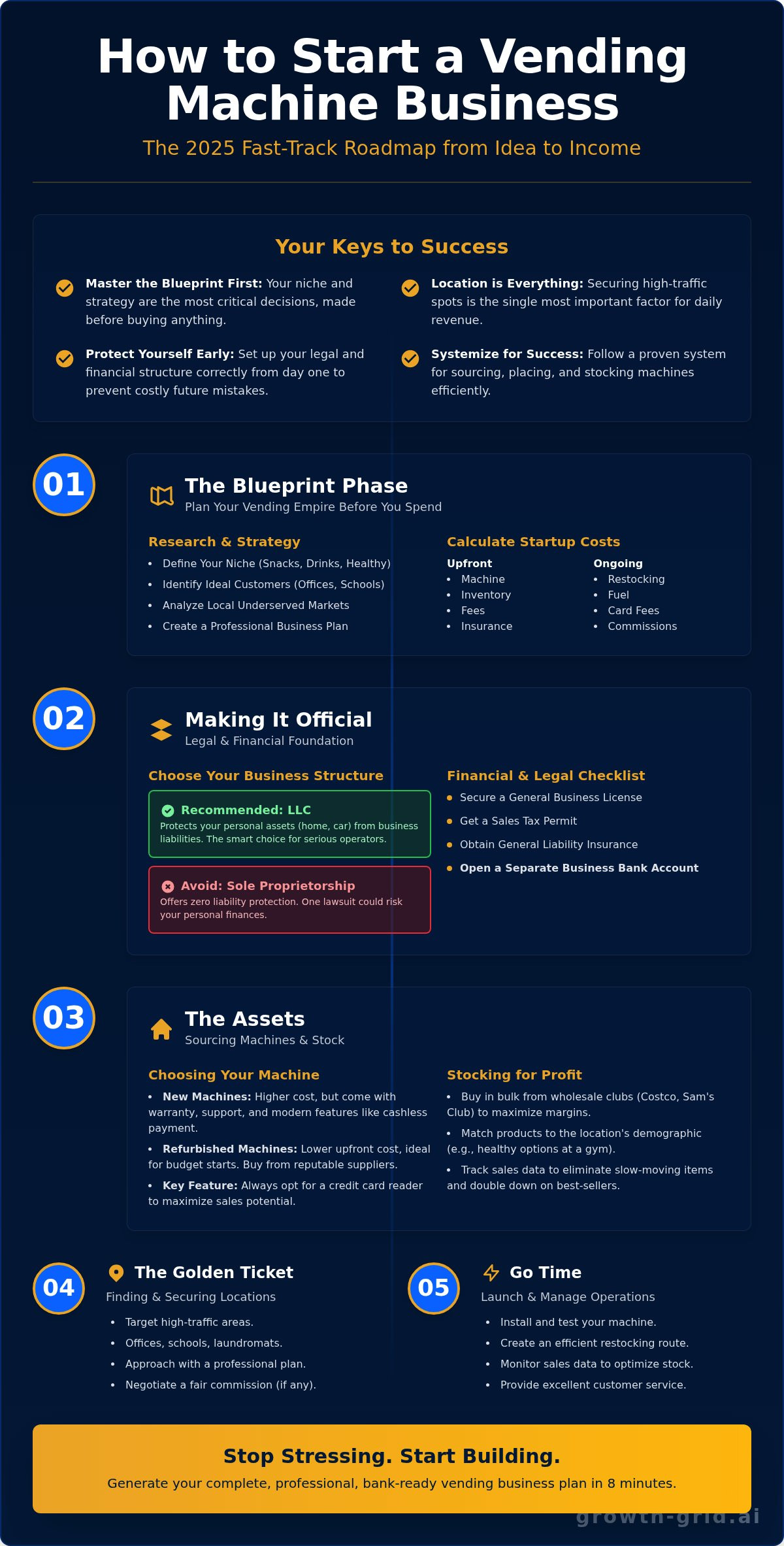
- Master the blueprint phase before buying a single machine; defining your niche is the most critical first decision you’ll make.
- Discover the strategy for securing high-traffic locations-the single most important factor that will make or break your daily revenue.
- Set up your legal and financial structure correctly from day one to protect your assets and prevent costly future mistakes.
- The secret to how to start a vending machine business successfully lies in a proven system for sourcing, placing, and stocking your machines efficiently.
Step 1: The Blueprint Phase – Plan Your Vending Empire
Thinking about how to start a vending machine business? Here’s the secret: 90% of your success is locked in before you ever spend a dime on a machine. This blueprint phase is where you win the game. It’s all about smart strategy, not premature spending. A solid plan now saves you from costly mistakes later by forcing you to define your niche-snacks, drinks, healthy options, or specialty items-and identify your ideal customer, whether they’re office workers, students, or gym-goers.
Researching Profitable Niches and Locations
The right product in the right place is everything. Analyze your local area for underserved markets with high foot traffic. Think office breakrooms, apartment complexes, schools, and laundromats. But don’t limit your thinking. While the history of vending machines is rooted in snacks and sodas, today’s most profitable niches include fresh coffee, personal protective equipment (PPE), and even small electronics.
Calculating Your Startup Costs (No Surprises)
Avoid financial surprises by mapping out every potential expense. A realistic budget is your best friend. Don’t forget to account for both upfront and ongoing costs to get a clear picture of your total investment.
- Upfront Costs: The machine itself (new or refurbished), initial bulk inventory, business registration fees, and liability insurance.
- Ongoing Costs: Monthly inventory restocking, fuel for your route, credit card processing fees, and any sales commissions paid to the location owner.
Why a Business Plan is Your First, Smartest Move
A business plan isn’t just a boring document for a bank loan; it’s your personal roadmap to profit. Use it to forecast potential income, plan your growth, and prove the concept to yourself before investing real money. Walking into a potential location with a professional plan shows you’re a serious operator, dramatically increasing your chances of securing the best spots.
Stop stressing. Generate your complete vending business plan in 8 minutes.
Step 2: Making It Official – Legal & Financial Setup
This is the part most new entrepreneurs dread, but getting it right saves you from massive headaches later. Think of this step not as boring paperwork, but as building a strong foundation that protects you, your money, and your future assets. Setting up your business correctly from day one is a critical part of how to start a vending machine business the smart way.
The most important rule? Keep your business and personal finances separate. It’s non-negotiable. Establish your business entity before you sign any location contracts or buy a single machine.
Choose Your Business Structure
You have a few options, but one is the clear winner for most vending operators. Don’t overthink it-just pick the one that offers protection and move on.
- ✓ Limited Liability Company (LLC): This is the most popular choice for a reason. It separates your business assets from your personal assets. If something goes wrong, your personal car and home are protected. It’s affordable and fast to set up using an online legal service.
- ✗ Sole Proprietorship: While this is the simplest to start (you just do business as yourself), it offers zero liability protection. We don’t recommend it. One lawsuit could put your personal finances at risk.
Secure Licenses, Permits, and Insurance
Every area has different rules, so a little research now prevents fines later. You’ll likely need a general business license from your city or county. Since you’re selling goods, you’ll also need a sales tax permit to collect and remit sales tax. The U.S. Small Business Administration is an excellent resource for navigating federal and state licenses and understanding what’s required. Finally, get general liability insurance immediately. It covers you for theft, machine damage, or if someone has an accident involving your equipment.
Open a Business Bank Account
Separating your finances is the fastest way to look and operate like a professional. As soon as your LLC is registered, head to a bank and open a dedicated business checking account. This simple action is key to a successful start.
- Makes tax time simple: No more digging through personal statements.
- Builds business credit: Establishes a financial history for future loans.
- Professionalism: Use a business debit or credit card for all purchases.
Step 3: The Assets – Sourcing Machines & Stock
You’ve found a location; now you need the two assets that generate every dollar of your revenue. Think of your machine as your 24/7 salesperson and the products inside as its script. Choosing the right combination is a critical step in learning how to start a vending machine business that scales efficiently. Focus on reliability and features that boost sales from day one. To start, keep it simple: one or two machines are all you need to learn the ropes without a massive upfront investment.
Buying Vending Machines: New, Used, or Refurbished?
Your first major decision is the machine itself. Don’t get paralyzed by choice-here’s the fast-track breakdown to making a smart decision:
- ✓ New Machines: The most expensive option, but they come with warranties, the latest tech, and peace of mind. Expect to pay $3,000-$7,000+.
- ✓ Refurbished Machines: The smart middle ground. These units have been professionally repaired and updated, offering reliability for a lower cost ($1,500-$4,000).
- ✓ Used Machines: The cheapest route ($500-$1,500), but also the riskiest. If you go this route, inspect it in person and test every function before buying.
Non-Negotiable Feature: No matter which route you choose, your machine must have a cashless payment system. Credit card and mobile payment readers can increase sales by 20-50% instantly. Don’t leave that money on the table.
Finding the Best Products to Sell
Your product mix directly determines your daily revenue. Start by sourcing from bulk wholesalers like Costco or Sam’s Club to get favorable pricing without needing huge order volumes. As you grow, connect with dedicated vending product distributors for even better rates. Most importantly, tailor your offerings to the location. An office needs quick lunch items and coffee, while a gym needs protein bars and sports drinks. Ask the location manager for input-they know their people best.
Pricing Your Products for Profit
Profit is the goal, so price strategically. Aim for a gross profit margin of 50-75% on most items. A quick way to benchmark is to see what nearby convenience stores are charging for similar products and price slightly below them. Remember to factor in all costs, not just the product. This includes location commissions and sales tax. Every state has different regulations, so be sure to understand your local seller’s permit requirements to stay compliant and profitable from your very first sale.
Step 4: The Golden Ticket – Finding and Securing Locations
You can have the best machine stocked with the most popular products, but it’s worthless without eyeballs and foot traffic. The most critical lesson in how to start a vending machine business is this: location is everything.
Think of it this way:
- ✓ A mediocre machine in a great location can still generate consistent profit.
- ✗ A state-of-the-art machine in a bad location will fail. Every time.
Your top priority is to find a spot with a captive and hungry audience. This is where your hard work pays off and your passive income dream becomes a reality.
How to Scout for High-Traffic Spots
Stop guessing and start hunting. Your goal is to build a target list of potential goldmines. Be systematic and efficient. Create a list of 20-30 local businesses and start your research. Look for places with a built-in audience, such as:
- Office buildings with 50+ employees
- Apartment complexes or student dorms
- Manufacturing plants, warehouses, and call centers
- Gyms, laundromats, and car dealerships
Visit your top prospects to observe traffic patterns and see what, if any, snack and drink options they currently have. This is your chance to identify a real need.
Pitching to Business Owners Like a Pro
Once you have your list, it’s time to sell your service. Don’t just show up and ask. Arrive prepared with a professional pitch. Create a simple one-page sell sheet that clearly outlines the benefits to them-it’s a 100% free, no-hassle perk for their employees or customers. As a powerful incentive, offer a commission on gross sales, typically between 10-25%. Be persistent but never pushy. A “no” today could become a “yes” in six months when their current vendor drops the ball.
The Vending Location Agreement
Verbal agreements lead to misunderstandings and lost revenue. Always get a signed, written contract before placing your machine. A professional agreement shows you are serious and protects both parties. Your contract should clearly specify:
- The commission rate and payment schedule.
- Contract length and renewal/termination terms.
- Service frequency and contact information.
- An exclusivity clause, making you their sole vending provider.
A professional pitch and a solid contract are non-negotiable. The same goes for your business plan. Show potential locations you’re serious by having a bank-ready plan from day one. You can generate yours in minutes and save weeks of work.
Step 5: Go Time – Launching and Managing Your Operations
This is where all your planning pays off. The research is done, the machine is secured, and the location is ready. Success from this point forward depends on efficiency and excellent service. A well-managed route is a profitable route. The key to scaling your new venture is to build smart systems from day one. This final step in how to start a vending machine business is about turning your assets into a reliable, automated income stream.
Setting Up and Stocking Your First Machine
Before you place your machine, make it perfect. A clean, fully functional machine makes a great first impression and prevents service calls later. Create a visual “planogram” or map of where each product will go to maximize visual appeal and sales. Double-check that all prices are correctly programmed and that the credit card reader and coin mechanism are working flawlessly. Your goal is a perfect customer experience from the very first transaction.
Creating an Efficient Restocking Route
Time is money, and so is gas. As you add more machines, group nearby locations together to create a logical service route. Don’t waste your day zigzagging across town. Use a simple spreadsheet or a vending management app to track inventory levels so you know exactly what to bring. Your service schedule-whether weekly or bi-weekly-should be determined by sales data, not guesswork. Service high-volume locations more frequently to avoid empty slots and lost sales.
Tracking and Optimizing for More Profit ✨
Your sales data is a goldmine. Use the machine’s built-in reporting or your management software to track which items fly off the shelves and which ones just sit there. Be ruthless about swapping out slow-moving products for new items. Don’t be afraid to experiment! A great way to get ideas is to simply ask the location manager or employees for feedback. They often know exactly what their team wants, giving you an instant path to higher profits.
Mastering these operational details is what separates a hobby from a high-growth business. Just as you optimize your product selection, you should constantly refine your business strategy. A powerful business plan acts as your roadmap. If you need to build or update yours fast, tools like GrowthGrid can help you create a professional, bank-ready plan in minutes.
Turn Your Vending Machine Idea Into Reality
You now have the complete roadmap for how to start a vending machine business. From creating a solid blueprint and handling the legal setup to securing the best machines and locations, you’re equipped with the essential knowledge for success. The journey from aspiring entrepreneur to business owner is laid out before you.
But that first step-the business plan-can feel like a major roadblock. Why spend weeks stressing or thousands of dollars on consultants? There’s a smarter, faster way to get it done right.
Trusted by thousands of successful startups, GrowthGrid helps you generate a professional, 40+ page, bank-ready plan in under 15 minutes. You’ll save 90% compared to traditional writers and get the perfect foundation for your new venture. Stop planning the old way and start building the smart way.
Ready to plan your business? Generate your professional vending machine business plan now!
Your vending empire is waiting. Take the first, most efficient step today.
Frequently Asked Questions
How much profit can one vending machine make per month?
Profit varies dramatically based on location and product selection. A machine in a low-traffic area might only generate $50 per month. However, a well-placed machine in a busy office building or school can easily earn $300-$500+ monthly. The key is high foot traffic and products that match the location’s demographic. Focus on securing premium locations for maximum, fast results.
Is a vending machine business really a form of passive income?
It’s more accurately described as semi-passive. While you don’t trade hours for dollars like a typical 9-to-5 job, it requires active work. You must consistently scout locations, restock inventory, collect cash, and perform machine maintenance. The income becomes more passive as you scale and systemize your operations, but it’s never a completely hands-off investment. It’s about efficient work, not zero work.
What are the most common mistakes new vending operators make?
The biggest mistakes are choosing a poor location and neglecting regular maintenance. A great machine in a dead zone will fail. Another common error is buying cheap, unreliable machines that lead to constant service calls and lost sales. Finally, not having a clear inventory system causes you to run out of popular items, directly hurting your monthly profits. Avoid these to get ahead fast.
Do I need a special vehicle for a vending machine business?
Not when you’re just starting out. You can easily service one or two machines using a reliable SUV or minivan. As your business grows and you add more machines to your route, investing in a dedicated cargo van becomes a smart, efficient choice. It saves you time and makes stocking much easier. Start lean and scale your vehicle as your profits grow.
How much money do you need to start a vending machine business with one machine?
The initial investment to start a vending machine business can be surprisingly affordable. Expect to spend between $1,500 and $3,000 for your first machine. This covers a quality refurbished machine (around $1,200-$2,000), initial product inventory ($300-$500), and any business licensing fees. Buying used equipment is the smart way to minimize your startup costs and accelerate your path to profitability.
What are the most profitable items to sell in a vending machine?
The most profitable items deliver high-profit margins and have consistent demand. Classic sodas like Coke and Pepsi, popular energy drinks, and bottled water are always top sellers. For snacks, focus on well-known brands like Lay’s, Doritos, Snickers, and M&M’s. These recognizable favorites sell fast and provide a reliable return on your inventory investment, simplifying your path to profit.
How do you handle machine repairs and vandalism?
The smart approach is both proactive and reactive. Prevent issues by placing machines in secure, monitored locations. For repairs, learn basic troubleshooting yourself-like fixing a jammed coin mechanism-to save time and money. For complex issues, have a reliable repair technician’s contact ready. Vandalism is rare but should be covered by your business insurance policy for total peace of mind.